
How weight-loss clinics run Google Ads that get approved and book consultations: certification, campaign structure, keywords, copy, landing pages and tracking.
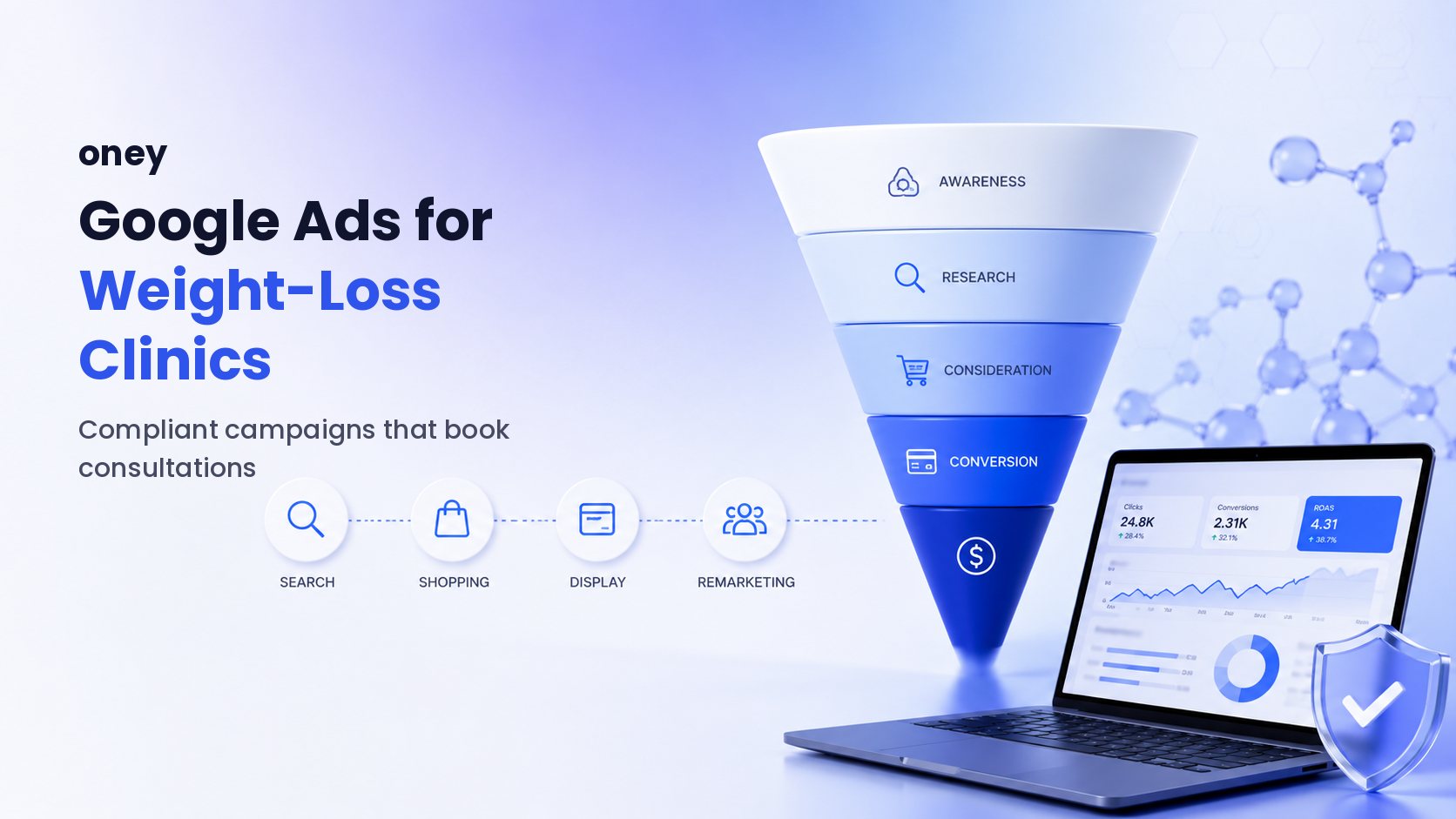
People searching for a weight-loss clinic are among the highest-intent patients in healthcare. They are comparing providers, prices and programs, and many are ready to book. Google Ads can put a clinic in front of them at exactly that moment. It is also one of the most tightly policed areas in Google Ads, because weight-loss programs increasingly involve prescription medications.
This guide covers how weight-loss clinics can run Google Ads that are approved, compliant and focused on booked consultations: certification, campaign structure, keywords, ad copy, landing pages and tracking. It's written for clinic owners and marketing leads, and it isn't legal or medical advice. For the wider marketing picture, read our telehealth and weight-loss clinic marketing guide.
What you can advertise depends on what you offer and what certification you hold.
Until certification is in place, keep prescription drug names out of ads, keywords and landing pages. Build campaigns around your service instead. Our Healthcare and medicines policy guide explains exactly what certification unlocks.
Separate campaigns by intent and risk, so one policy issue can't stop the whole account:
| Campaign | Example keywords | Landing page |
| Brand | [clinic name], [clinic name] reviews | Homepage or reviews page |
| Core service | medical weight loss program, weight loss clinic, physician weight loss | Service page with eligibility and process |
| Local | weight loss clinic near me, [city] weight loss doctor | Location page with address, providers and booking |
| Online / telehealth | online weight loss program, telehealth weight loss | Telehealth service page showing states served |
| Pricing and process | medical weight loss cost, how medical weight loss works | Transparent pricing and process page |
| Medication-specific (certified only) | Terms your certification allows | Dedicated page reviewed by your medical team |
Keep medication-specific campaigns separate so they can be paused without affecting the rest of the account. Match location targeting to where your providers are licensed to practise.
Weight-loss searches attract a lot of traffic you don't want to pay for. Start with negatives for:
Review search terms every week in the first two months, and add negatives as patterns appear.
Sell the care, not the drug or the result. Strong clinic ads focus on:
Avoid guaranteed outcomes ("lose 30 lbs in 30 days"), before/after claims, and anything implying a compounded medication is FDA-approved or the same as a branded drug. Our semaglutide and tirzepatide compliance guide covers the drug-specific pitfalls.
Google reviews the landing page as well as the ad, and patients decide there. A clinic landing page that works for both:
Optimise for the outcome the clinic actually needs. Set up conversion tracking for:
Be careful with tracking on health pages. Tags on intake forms or condition-specific pages can collect health information. Review your setup with privacy counsel, limit what is sent to ad platforms, and prefer consent-aware or server-side setups where appropriate.
Start with manual CPC or Maximise Clicks with bid caps while the account builds conversion history. Move to Maximise Conversions and then Target CPA once you have steady conversion volume. Judge performance on cost per booked consultation and consult-to-patient conversion rate, not cost per lead. Retention matters too: in program-based care, patient lifetime value sets how much you can afford to bid.
Yes. Service-focused ads for weight-loss programs can run when they avoid prescription drug promotion. Clinics that prescribe medication need the required certification, such as LegitScript and Google's healthcare certification, before running restricted ads.
Only as a certified advertiser, in the countries where Google allows it, and within the policy. Uncertified clinics should keep drug names out of ads, keywords and landing pages.
Booked consultations. Clicks and form fills are useful signals, but cost per booked consultation and consult-to-patient conversion show whether campaigns are profitable.
Brand and local service campaigns often produce bookings in the first weeks. Non-brand campaigns usually need a learning period of several weeks before bidding and targeting settle.
We'll review your account, landing pages and tracking, and show you where compliant campaigns can bring in more booked patients.
Get a free 30-minute audit of your Google Ads or Meta Ads account. We’ll review compliance, structure, and growth opportunities — no strings attached.
Book a Free Audit